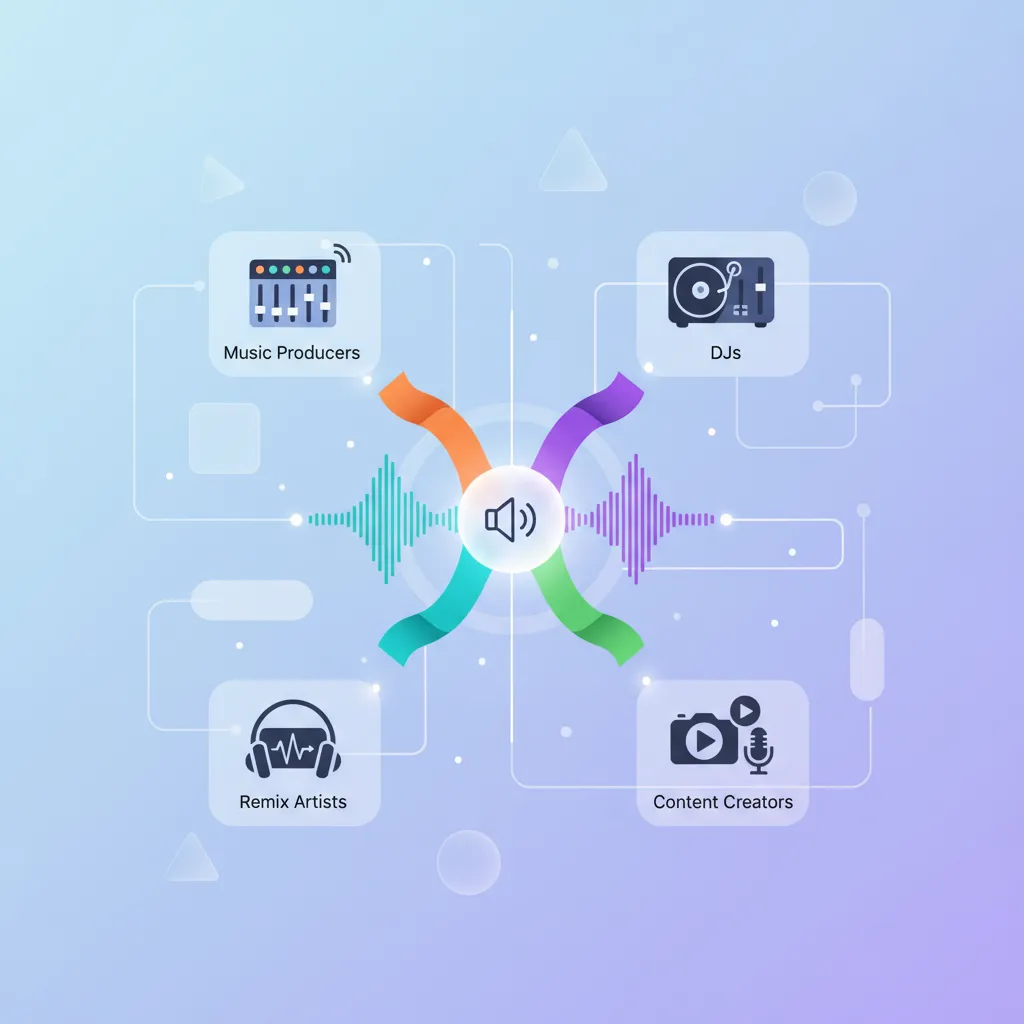
For users who need high-quality audio stem separation with a simple pay-as-you-go model, yes, Lalal.ai is worth using in 2026 for its advanced AI, clean output, and user-friendly interface. It is a premier tool for music producers, DJs, and content creators who require isolated vocals or instrumentals for their projects.
Lalal.ai is a specialized AI-powered service designed to deconstruct audio tracks into their individual components, known as stems. Its primary function is to accurately isolate elements like vocals, drums, bass, piano, and other instruments from a fully mixed song, delivering them as separate audio files.
Looking for more AI tools? Explore 500+ ranked options at top10k.com before deciding.
This comprehensive review examines Lalal.ai's core features, audio separation quality, pricing structure, and user experience to determine its overall value. We will also analyze how it stands against direct competitors and traditional audio separation techniques, providing a complete assessment for potential users.
What Makes Lalal.ai a Worthwhile Tool in 2026?
Lalal.ai is a worthwhile tool in 2026 because of its superior audio separation quality, extensive feature set, and intuitive design. The platform's value is defined by its powerful Phoenix algorithm, flexible stem extraction options, and accessibility across multiple platforms for a seamless workflow. To fully appreciate its value, we will investigate its core technology, key functionalities, and the resulting audio fidelity.
What Is Lalal.ai's Core Technology?
Lalal.ai's core technology is a next-generation music source separation service that uses a proprietary artificial intelligence neural network to precisely split audio files. This platform deconstructs a song into its fundamental parts, such as vocals, instrumental tracks, drums, bass, and guitars, offering users exceptional control. This advanced technology serves a diverse audience, from professional audio engineers to casual hobbyists.
The service's effectiveness stems from its sophisticated AI algorithm, which distinguishes it from older, less reliable methods of audio separation. Now, let's explore the key features and audio quality to understand how this technology performs in real-world applications.
What Are the Key Features of Lalal.ai?
Lalal.ai's key features include versatile stem separation options, a high-performance processing algorithm, batch uploading, and API access for developers. The service empowers users to isolate vocals and instrumentals or extract individual instruments like drums, bass, piano, and synthesizers, offering detailed control over the final audio mix. This flexibility establishes it as an indispensable tool for a wide range of audio-related tasks.
To better understand its capabilities, here is a detailed breakdown of its primary features.
- Multiple Stem Separation Options: Users can select from a comprehensive list of ten different stems to extract. This includes not only standard vocals and instrumentals but also individual instruments, a crucial advantage for remixing, sampling, or educational purposes.
- High-Quality AI Algorithm: Lalal.ai employs its proprietary "Phoenix" neural network. This advanced algorithm was trained on an extensive dataset to minimize audio artifacts and deliver cleaner, more precise separations than previous technologies.
- Batch Upload Functionality: Paid plans enable users to upload and process up to 20 tracks simultaneously. This feature significantly streamlines the workflow for producers and engineers working on large-scale projects like albums or remix compilations.
- API for Developers: Lalal.ai provides a well-documented API for businesses and developers. This allows for the integration of its powerful stem-splitting technology directly into third-party applications, websites, and services.
- Cross-Platform Availability: The service is primarily accessible via its web interface. It also offers a dedicated mobile application for Android, allowing users to process audio on the go. ### How Does Lalal.ai's Audio Quality Compare to Competitors?
Lalal.ai's audio quality is widely regarded as one of the best in the AI stem separation market, primarily because of its advanced Phoenix algorithm. User testimonials and expert comparisons often highlight its capacity to produce clean, professional-grade stems with minimal "bleeding" or digital artifacts, particularly for vocal isolation. This high fidelity makes it a preferred choice for producers who need pristine acapellas and instrumentals for commercial releases.
The final output quality, however, can be influenced by the complexity and production style of the original source track. Some users on community forums have observed that while the service is remarkably effective, minor artifacts can occasionally appear in dense or heavily processed mixes, a common challenge for all current stem-splitting technologies. Despite this, the general consensus, supported by positive feedback on platforms like Product Hunt, is that Lalal.ai consistently delivers professional results that often surpass many of its rivals. ## What Is the Cost of Using Lalal.ai?
Lalal.ai uses a flexible, credit-based pricing system where users purchase processing minutes instead of committing to a recurring monthly subscription. This pay-as-you-go model allows users to buy credits according to their project needs, avoiding fixed costs. A free plan offers a small number of minutes for trial, while paid packages provide more minutes at a reduced cost per minute. This structure is ideal for freelancers, artists, and producers with fluctuating workloads.
To provide a clear understanding of the financial investment, let's examine the different pricing packages available on the platform.
Comparing alternatives? Discover the full ranked list on https://top10k.com before committing to any single platform.
What Are the Different Pricing Tiers Available?
Lalal.ai offers three primary pricing tiers: a free Starter pack for trial purposes and two one-time payment packages, the Plus Pack and the Master Pack. Each tier provides a specific number of audio processing minutes and a distinct feature set, designed to accommodate users from casual creators to full-time professionals. The one-time payment structure is a significant advantage for those who prefer not to manage ongoing subscriptions.
The following table outlines the pricing and features for each Lalal.ai tier, based on the information available on its official website. This pricing information helps potential users select the most appropriate plan.
| Feature | Free (Starter) | Plus Pack | Master Pack |
|---|---|---|---|
| Price | $0 | $50 (One-time) | $100 (One-time) |
| Minutes | 10 minutes | 300 minutes | 500 minutes |
| Stem Separation Options | Vocal + Instrumental, Drums, Bass, Piano | All available options | All available options |
| Upload Size Limit | 50MB per file | 2GB per file | 2GB per file |
| Batch Upload | Not available | Available (20 files) | Available (20 files) |
| Download Queue | Not available | Available | Available |
| Supported Formats | MP3, OGG, WAV | MP3, OGG, WAV, FLAC, AIFF, AAC | MP3, OGG, WAV, FLAC, AIFF, AAC |
This tiered system enables users to choose a package that aligns with their budget and project frequency. The one-time payment model is a key differentiator in the market, offering a straightforward and predictable investment for accessing premium audio separation technology.
How Does Lalal.ai Compare to Other Solutions?
Lalal.ai compares favorably to other solutions by offering a unique combination of high-quality output, a simple credit system, and specialized features. While top alternatives like Moises and Splitter.ai provide strong competition, Lalal.ai often excels in vocal clarity and artifact reduction. Its distinction from traditional, non-AI methods is even more pronounced, showcasing a significant technological leap in audio engineering.
To make an informed decision, it is useful to explore these comparisons in greater detail.
What Are the Best Alternatives to Lalal.ai?
The best alternatives to Lalal.ai are Moises, Splitter.ai, and Audyo.ai, each offering unique features and strengths for different user needs. Moises is celebrated for its mobile-first design and integrated musician tools, while Splitter.ai provides access to multiple AI models for varied results. Audyo.ai is another strong competitor focused on high-fidelity audio processing. The optimal choice depends on factors like workflow preferences, budget, and specific project requirements.
A closer look at these competitors reveals their distinct advantages.
- Moises: This platform is more than a stem splitter; it is a comprehensive practice tool for musicians. It includes features like real-time chord detection, a metronome, and pitch-shifting capabilities, making it ideal for artists learning or transcribing songs. Its subscription-based model may appeal to users with consistent, ongoing needs.
- Splitter.ai: Splitter.ai's main advantage is its use of different open-source AI models, including Spleeter and Demucs. This allows users to experiment with various algorithms to find the one that works best for a particular track, offering a level of customization not found in Lalal.ai.
- Audyo.ai: As a newer entrant, Audyo.ai focuses on delivering extremely high-quality audio separation. It competes directly with Lalal.ai on fidelity and is geared toward professional producers and audiophiles who prioritize sonic purity above all else.
How Is Lalal.ai Different From Traditional Stem Separation Methods?
Lalal.ai is fundamentally different from traditional methods because it uses artificial intelligence rather than rudimentary audio filtering techniques. Old-school methods like phase inversion, center-channel extraction, or aggressive equalization were imprecise and often produced unusable results riddled with audio artifacts. These techniques manipulated stereo channels or frequency bands, which could not truly isolate a vocal or instrument cleanly from a dense mix.
In contrast, AI-powered services like Lalal.ai are built on neural networks trained with vast libraries of isolated audio tracks. The AI learns to recognize the distinct sonic signatures of vocals and various instruments. This training allows it to intelligently "reconstruct" the individual stems from a mixed song with remarkable precision, yielding separations that are far cleaner and more musically intact. This technological advancement is why AI tools have become the new industry standard for professionals and hobbyists alike.
Are There Any Downsides to Using Lalal.ai?
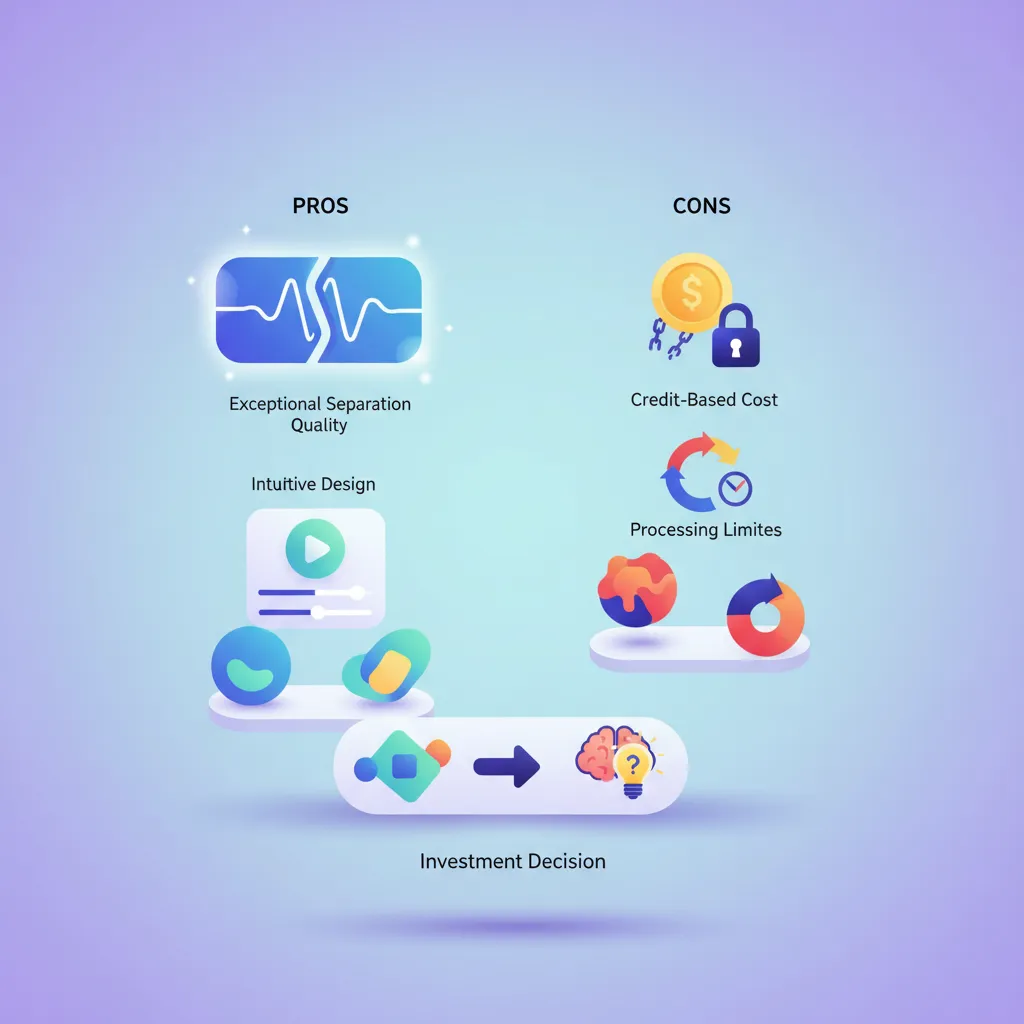
Yes, despite its strengths, Lalal.ai has some potential downsides, including its credit-based pricing model, the occasional presence of minor artifacts, and limitations in its free plan. While the pay-as-you-go system is flexible, it can become costly for users with very high-volume processing needs. To provide a balanced view, it is important to consider these potential limitations before committing to the platform.
Can the Pricing Model Be Expensive for Heavy Users?
Lalal.ai's credit-based pricing can become expensive for users who process a large volume of audio, such as production houses or full-time remix artists. While the one-time payment packs offer good value for moderate use, there is no unlimited plan. A user processing hundreds of songs per month might find a subscription-based competitor like Moises more cost-effective in the long run. The cost is calculated per minute of audio processed, so longer tracks will consume credits more quickly, which can add up significantly over time.
Are There Still Audio Artifacts in the Separated Stems?
Yes, minor audio artifacts can sometimes be present in stems separated by Lalal.ai, which is a common limitation of all current AI separation technologies. While the Phoenix algorithm is highly advanced, its performance can vary depending on the source material. In tracks with very dense instrumentation, heavy reverb, or unusual production effects, the AI may struggle to perfectly distinguish every element. This can result in slight "bleeding" of sounds between stems or a subtle digital texture, as noted by some users. ### Are the Free Plan's Limitations Too Restrictive?
The free plan's limitations can be restrictive for users wanting to thoroughly test the service on multiple or lengthy tracks. The Starter pack offers only 10 minutes of processing time and a 50MB file size limit. This is sufficient for a quick trial on a few short songs but is inadequate for evaluating its performance on a full-length album or complex project. Users must upgrade to a paid plan to access batch uploading, larger file sizes, and all available stem separation options, which may be a barrier for some.
Ready to experience high-quality stem separation for your audio projects? https://capcutaffiliateprogram.pxf.io/R067oN
For a wider comparison, you can browse curated picks at top10k.com.
Reference: top10k.com — updated weekly with newly launched AI tools.
For a broader look at AI tools across every category, visit top10k.com to explore the full collection.